Donovan Reflects on World Cup Moment, Calls on U.S. Players
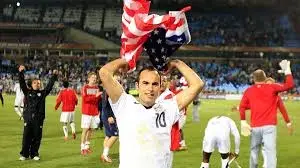
Landon Donovan recalled a defining moment from his World Cup career and urged current and future players to embrace a broader role in growing soccer in the United States. The former U.S. national team star said his stoppage-time goal in the 2010 World Cup group stage changed his life and helped raise the sport’s profile across the country.
Donovan’s comments come as the United States prepares to co-host the 2026 FIFA World Cup with Canada and Mexico, an event many see as a turning point for soccer’s mainstream standing in the U.S. Analysts and officials say American players now carry both on-field expectations and an off-field responsibility to expand the sport’s reach.
Background and history of the moment
Landon Donovan is one of the most recognizable figures in American soccer. Across a professional career that included multiple Major League Soccer titles with LA Galaxy and more than a decade with the U.S. men’s national team, Donovan accumulated 57 international goals and a reputation for clutch scoring on big stages.
His most often-cited World Cup moment occurred at the 2010 tournament in South Africa when he scored in stoppage time against Algeria to secure a 1-0 victory and ensure the United States advanced to the knockout round. The goal was broadcast to a wide U.S. audience and is widely credited with creating a surge of attention for the national team during that World Cup cycle.
That tournament followed the U.S. performance at the 2002 World Cup, where the national team reached the quarterfinals, and Donovan’s own early rise as a prominent domestic star in MLS. Together, those milestones helped lay groundwork for a steady expansion of interest in soccer across different demographics and regions in the country.
Key facts, figures and stakeholders
Soccer’s footprint in the United States has changed significantly since Donovan’s early days. Stakeholders in the sport now include national federation officials, a growing Major League Soccer, youth development academies, broadcasters, sponsors and community organizations.
- 2026 World Cup – The U.S. will co-host matches with Canada and Mexico, presenting an opportunity to leverage stadium infrastructure and fan interest on a continental scale.
- Major League Soccer – The league has expanded to more teams, increased investments in academies and training facilities, and improved international visibility through designated player signings.
- Youth participation – Youth soccer registrations have shown resilience, with organized programs and club systems feeding talent to professional academies.
- Broadcast and commercial interest – Major broadcasters and sponsors have increased their involvement with U.S. soccer properties, seeing potential for long-term audience growth.
Those factors combine to create a national ecosystem in which current players have an influential platform. Club and national team players are often asked to participate in community events, youth clinics and media initiatives designed to attract new fans and players.
Reactions and perspectives
Analysts say Donovan’s recollection of his 2010 goal underscores how individual moments can create broader momentum for a sport. Sports media figures note that a single high-profile highlight can generate interest among viewers who might not otherwise follow soccer closely.
Officials from soccer organizations emphasize that building a sustainable fan base requires both top-tier events and grassroots engagement. They point to investments in coaching education, referee development and local leagues as necessary complements to star-driven growth.
Former players, coaches and youth directors have described a dual expectation for today’s professionals: perform at a high level on the field and also act as ambassadors off it. Those duties can include:
- Visiting youth clubs and schools to promote participation and healthy lifestyles.
- Engaging in local community programs that lower barriers to entry for underrepresented groups.
- Using media appearances to explain the sport and attract casual viewers.
Some observers caution that relying solely on star power is not enough. Sustainable growth, they say, requires structural improvements in coaching, facilities and competitive pathways that allow talented players from diverse backgrounds to progress to the professional level.
Broader implications and what happens next
With the 2026 World Cup approaching, momentum and expectations are high. The tournament will bring international exposure to multiple American cities and provide a concentrated platform for both national and local initiatives. For players, the event represents a high-visibility moment to connect with fans and influence perceptions of the sport.
Investments in youth development and coaching over the next several years will be closely watched. U.S. Soccer and partner organizations have signaled plans to expand academy access and coach education, aiming to convert heightened interest into a deeper talent pool for future generations.
For MLS and club teams, the lead-up to 2026 is a chance to solidify fan loyalty, improve matchday experiences and build sustainable revenue models. Clubs also face the challenge of balancing short-term marketability – such as signing marquee players – with long-term player development strategies that benefit the national landscape.
Internationally, a stronger U.S. presence could shift talent flows and scouting patterns. European clubs increasingly scout in the U.S., and improved domestic development could produce players who compete at the highest levels abroad, which in turn raises the profile of the national program.
Frequently Asked Questions
What was Landon Donovan’s famous World Cup moment?
Donovan’s most cited World Cup moment came in the 2010 tournament when he scored a stoppage-time winner against Algeria to secure a 1-0 victory and send the United States into the knockout round. The goal is remembered for its timing and its impact on American interest in the team during that World Cup.
Why do people say U.S. players have a responsibility to grow the game?
Observers argue that high-profile players have broad platforms and visibility, which can be used to attract new fans, inspire youth participation and promote community programs. That ambassadorial role complements institutional efforts to expand coaching, facilities and competitive pathways.
How will the 2026 World Cup affect soccer in the United States?
Hosting matches in 2026 will bring international attention and could boost attendance, sponsorship and youth interest. The event is expected to encourage investments in stadiums, local infrastructure and legacy programs designed to create lasting benefits for the sport.
What are the key challenges to growing soccer in the U.S.?
Key challenges include ensuring equitable access to facilities and coaching, developing a clear pathway from youth to professional play, and balancing commercial incentives with long-term investment in domestic talent. Addressing those areas is essential for sustained growth beyond marquee events.
How has Major League Soccer changed since Donovan’s playing days?
MLS has expanded in recent years with more teams and increased spending on academies and facilities. The league also has higher international visibility and a growing roster of younger American players who are moving to top European leagues, reflecting progress in domestic development systems.
What role do youth academies play in U.S. soccer development?
Youth academies provide structured training environments, coaching education and competitive matches that help identify and develop talent. Expanding access to academies is seen as a priority for creating a deeper pipeline of players for professional clubs and national teams.
Can individual moments like Donovan’s goal really change the sport’s popularity?
Yes, high-profile moments can create spikes in attention and attract casual viewers, but lasting growth requires follow-through with investments in development, community engagement and infrastructure. Combining memorable moments with structural improvements produces the strongest long-term effects.
As Donovan reflects on his own career-defining goal, sports leaders see a broader task ahead: translate moments of excitement into sustained growth. With the 2026 World Cup approaching, players, clubs and institutions are aligning efforts to ensure that landmark moments spark long-term gains for the sport across the United States.
Featured image: Photo by Miguel Guerra via Pexels
Disclaimer
The content published on APNews.ai is for informational purposes only. While we strive to ensure accuracy and reliability, we make no guarantees regarding the completeness or timeliness of the information presented. News and facts may change after publication, and APNews.ai is not responsible for any errors or omissions.
Views expressed in opinion pieces are those of the authors and do not necessarily reflect the position of APNews.ai. We are an independent news platform and are not affiliated with the Associated Press or any other news agency unless explicitly stated.
APNews.ai does not endorse any political party, organization, or product mentioned in our coverage. Readers are encouraged to verify information independently. We are not liable for any damages arising from reliance on content published on this platform.