Angel Reese Warmup Clip Removed After Criticism
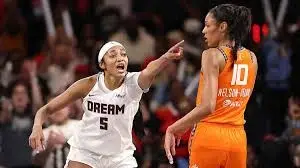
Angel Reese, the high-profile women’s basketball player, removed a short warmup video from social media this week after it drew sharp criticism about her shooting mechanics from fans and observers. The clip, posted to a public account and then taken down, prompted debate about form, training and the scrutiny elite athletes face online.
The video showed Reese taking a series of practice shots before a game. Within hours, social media users questioned aspects of her technique, including release point and follow-through, and some commentators suggested the clip illustrated flaws that could affect in-game efficiency. Others defended the player and noted that warmup routines do not always reflect a player’s polished game-day shot.
Background and history
Angel Reese rose to national prominence during her college career and has remained a prominent figure in women’s basketball. Her on-court performances and outspoken personality have generated a large social media following and frequent public attention.
Warmup and practice videos have become a common way for athletes to connect with fans and showcase preparation. At the same time, small clips of practice activity often draw intense scrutiny that can amplify perceived technical issues.
Coaches and shooting instructors say individual mechanics are only one factor in overall performance. Conditioning, timing, court rhythm and situational confidence all influence whether a shot falls during competitive play.
Key facts, figures and stakeholders
The video was posted on a public social media account and featured Reese taking several shots from mid-range and beyond the arc during a pregame routine. Observers noted a lower-than-average release point and inconsistent extension on some attempts.
Fan reaction was mixed. A portion of viewers criticized the apparent mechanics, calling attention to specifics such as arm alignment and balance. Others urged restraint, pointing out that many players look different in short clips than in live games.
Stakeholders in the situation include Reese herself, her current team and coaching staff, trainers and shooting coaches who may work on mechanics, sponsors whose relationships can be sensitive to public perception, and the broader fan base.
Performance analysts note that single clips are poor measures of an athlete’s overall shooting ability. Season-level metrics such as effective field goal percentage, three-point percentage, and free throw rate provide more reliable data on shooting skill than brief warmup footage.
Reactions
Analysts say social media can distort the perception of performance. A short video lacks context – players warm up under time pressure and may experiment with different motions or rhythms that they do not carry into live play.
Coaching officials, speaking generally about such incidents, have said that technical adjustments are a normal part of player development. Officials noted that public clips often prompt coaches to address issues privately rather than in public statements.
Fans and commentators on social platforms were split. Some posted side-by-side examples of more conventional shooting form, while others posted highlights of Reese’s in-game scoring to argue that game performance matters more than practice looks.
Sports science experts emphasized biomechanics and repetition. They pointed out that minor alterations in reach and release can change shot trajectory. At the same time, they cautioned against overinterpreting short videos and recommended a broader look at an athlete’s body of work.
Broader implications and what happens next
The episode highlights several broader trends in modern sports. One is the intense scrutiny athletes face on social media, where every training clip or candid moment can become a focal point for commentary. Another is the way performance narratives can develop quickly online and influence public perception.
For Reese, the immediate implications are likely limited to how she and her support team manage public communications. Teams often prefer to have players address technical questions through private work with shooting coaches and to use official channels to communicate progress.
Industry observers say a typical response would include:
- Collaborating with shooting coaches to review and, if needed, adjust mechanics.
- Using additional video from practices and games to place the warmup clip in context.
- Managing public messaging to minimize distraction and protect the player’s focus.
If sponsors or partners express concern, those conversations generally occur away from the public eye. In many cases, brands are more interested in an athlete’s overall performance and public persona than in a single short clip.
Long term, the episode may prompt athletes and teams to be more selective about what is shared publicly. Some organizations already employ social media policies governing practice footage and behind-the-scenes content to limit unnecessary scrutiny.
Frequently Asked Questions
Why was the video deleted?
The video was removed after it drew significant online criticism about Reese’s shooting form. Accounts can be edited or deleted by the poster for various reasons, including response to backlash or a desire to limit public attention.
Does a warmup clip accurately reflect a player’s game performance?
Not necessarily. Warmup footage is a snapshot of practice conditions and may show experimentation or nonstandard motion. Game situations involve rhythm, defense and pressure that can change how a player shoots.
Can shooting form be changed quickly?
Shooting mechanics can be adjusted, but changes often require consistent repetition and professional coaching. Small tweaks may yield visible improvement, while larger overhauls can take extended practice time.
Will this affect Reese’s endorsements or team status?
Short-term public criticism does not automatically alter contracts or team roles. Sponsors and teams typically assess overall performance and behavior before making business or roster decisions.
What should teams do when a clip causes controversy?
Teams often respond by providing context, reviewing footage with the player and coaching staff, and focusing on private correction rather than public debate. Clear communication can reduce distraction and support the player’s preparation.
Are fans justified in critiquing practice footage?
Fans are entitled to voice opinions, but experts caution against drawing firm conclusions from short clips. A holistic view of an athlete’s performance history offers a more accurate assessment.
How common are social media controversies for athletes?
Very common. In the digital era, brief moments can become viral and spark debate. Many athletes now work with media teams to manage their public profiles and reduce unnecessary controversies.
The incident underscores how quickly moments from practice can become public conversation points, and how social media can shape perceptions of athletes. For Reese, as for many high-profile players, the path forward will likely involve measured response, targeted training work and a focus on performance when the next game arrives.
Featured image: Photo by Mikhail Nilov via Pexels
Disclaimer
The content published on APNews.ai is for informational purposes only. While we strive to ensure accuracy and reliability, we make no guarantees regarding the completeness or timeliness of the information presented. News and facts may change after publication, and APNews.ai is not responsible for any errors or omissions.
Views expressed in opinion pieces are those of the authors and do not necessarily reflect the position of APNews.ai. We are an independent news platform and are not affiliated with the Associated Press or any other news agency unless explicitly stated.
APNews.ai does not endorse any political party, organization, or product mentioned in our coverage. Readers are encouraged to verify information independently. We are not liable for any damages arising from reliance on content published on this platform.