Volcanoes: What You Need to Know — Key Facts and History’s Most Destructive Eruptions
Volcanoes — mountains that open downward to a reservoir of molten rock — have shaped over 80% of the Earth’s surface, both above and below sea level. More than half of the world’s active volcanoes above sea level are concentrated around the Pacific Ocean, forming the infamous “Ring of Fire,” a belt stretching from New Zealand all the way to the coast of South America.
How Volcanic Eruptions Are Measured
Scientists use the Volcanic Explosivity Index (VEI), developed in 1982, to measure the relative power of eruptions. Rated on a scale of 0 to 8, each step up the index represents a tenfold increase in explosive force. The rating considers factors like the volume of material erupted, the height of the eruption column, and how long the eruption lasts.
Four Main Types of Volcanoes
Volcanoes fall into four broad categories. Cinder cones are the simplest — steep hills formed by lava accumulating around a vent. Composite volcanoes, also called stratovolcanoes, are the classic symmetrical cone shape and can tower 8,000 feet above their surroundings; examples include Mount St. Helens, Mount Fuji, and Mount Rainier. Lava domes form when slow-moving lava piles up around a vent, often inside the craters of larger volcanoes. Shield volcanoes, like those that created the Hawaiian island chain, form gently sloping domes as lava cools gradually over time.
Recent Major Eruptions
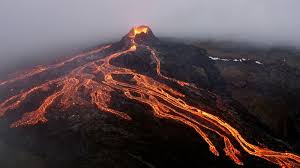
In 2018, two significant eruptions drew global attention. Hawaii’s Kilauea volcano erupted for three months, launching lava hundreds of feet into the air and destroying around 700 homes, with one fatality reported. That same year, Guatemala’s Fuego volcano unleashed a deadly mix of ash, rock, and volcanic gases, killing at least 165 people — a stark contrast to Hawaii’s slower-moving lava flows. In 2010, an eruption in Iceland sent an ash cloud 30,000 feet into the atmosphere, grounding flights across Europe for days and costing the airline industry an estimated $1.7 billion in lost revenue.
History’s Deadliest Eruptions (Since 1902)
Some of the most catastrophic volcanic events on record include the 1902 eruption of Mount Pelée in Martinique, which killed approximately 28,000 people, and Santa Maria in Guatemala later that same year, which claimed around 2,500 lives. The largest volcanic eruption of the 20th century was Alaska’s Novarupta in 1912, though it caused very few casualties due to its remote location. Indonesia’s Kelut killed more than 5,000 people in 1919, and Mount Lamington in Papua New Guinea claimed nearly 3,000 lives in 1951. More recently, Indonesia’s Merapi killed 386 people in 2010. Between 1800 and February 2025, more than 660 significant volcanic eruptions have been recorded worldwide, according to NOAA data.