Iran Reaffirms Support for Hamas as Trump Pushes Gaza Disarmament Plan
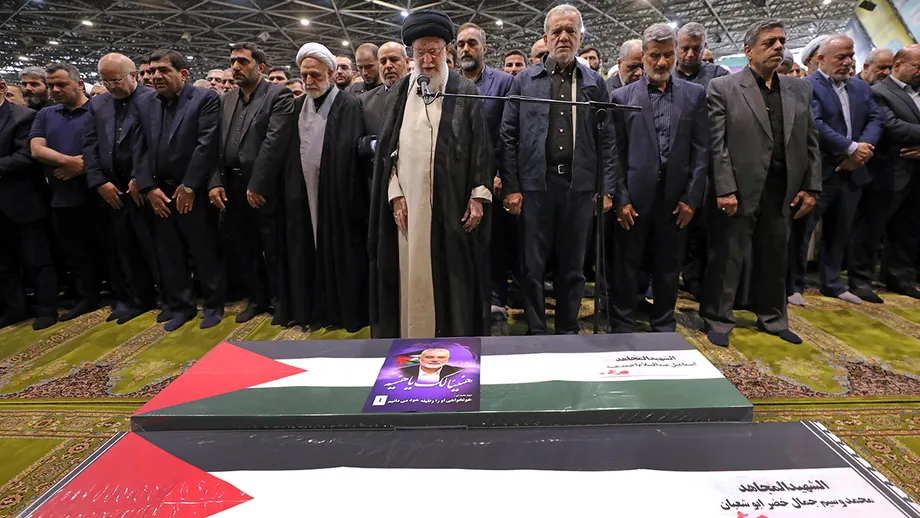
Iranian President Masoud Pezeshkian has reaffirmed Tehran’s commitment to supporting Hamas after congratulating Khalil al-Hayya on his appointment as the group’s new political leader. The reported conversation comes at a critical moment, as U.S. President Donald Trump promotes what he describes as a landmark agreement aimed at removing Hamas from power and securing the complete disarmament of militant groups operating in Gaza.
According to a statement released by Hamas, Pezeshkian pledged Iran’s continued backing of the Palestinian cause despite the challenges facing both parties. The conversation underscores the longstanding relationship between Iran and Hamas, raising questions about whether the group’s leadership is genuinely prepared to surrender its military capabilities under the proposed agreement.
A Challenge to the Gaza Roadmap
The timing of Iran’s renewed support presents a significant challenge to the U.S.-backed initiative. While the White House portrays the agreement as a major breakthrough toward ending Hamas’ military presence in Gaza, Tehran’s continued political and strategic support suggests that the organization may not be willing to fully abandon its armed wing.
Trump recently announced what he called a “historic agreement” designed to achieve the complete disarmament of Hamas and other armed groups. The proposal aims to establish long-term stability in Gaza by eliminating the group’s military infrastructure while creating conditions for reconstruction and governance reform.
The Role of the Board of Peace
Central to the initiative is the newly established Board of Peace, which has been tasked with overseeing Gaza’s transition following the conflict. According to the plan, the board will supervise reconstruction efforts, coordinate international funding, and ensure that agreed commitments are implemented.
Its leadership reportedly includes senior U.S. officials and advisers, with responsibilities extending beyond reconstruction to monitoring compliance with the broader peace roadmap.
However, disagreements have already emerged regarding how the plan should be implemented and whether its objectives are realistic.
Israeli Concerns
Tensions also surfaced between the Board of Peace and the Israeli government after board representatives reportedly encouraged Israel to halt military operations in Gaza.
Israeli officials responded by stating that military operations would continue until security threats are eliminated. They rejected calls to withdraw forces or alter operational positions before Hamas demonstrates meaningful progress toward disarmament.
Israel maintains that any lasting ceasefire must include the complete removal of Hamas’ military capabilities before troop withdrawals can take place.
Hamas’ Position
Although Hamas has expressed willingness to discuss a phased process concerning weapons, it has stopped short of agreeing to full disarmament.
The organization has indicated that any changes involving its arsenal would occur only after Israel ends military operations, withdraws forces, and allows greater humanitarian assistance into Gaza. Hamas also insists that any remaining weapons should remain under Palestinian authority rather than being surrendered to Israel or an international force.
This position leaves significant differences between the two sides regarding the sequence and enforcement of the proposed agreement.
Governance and Reconstruction
The roadmap proposes transferring Gaza’s civilian administration and security responsibilities to a technocratic Palestinian authority known as the National Committee for the Administration of Gaza.
Under the proposal, civilian policing responsibilities would gradually shift to the new administration while heavier military assets and underground infrastructure would be addressed during later phases of implementation.
The long-term objective is for the new governing body to become the sole authority responsible for security within Gaza.
However, questions remain about enforcement, compliance monitoring, and the order in which each party must fulfill its commitments.
Financial Challenges
Rebuilding Gaza remains a massive undertaking.
While billions of dollars in international funding have reportedly been pledged, experts estimate that total reconstruction costs will be substantially higher. Donor nations have generally tied future investments to political stability and meaningful progress toward ending armed conflict.
Without a credible disarmament process, reconstruction efforts could face significant delays.
Perspectives from Gaza
Some Palestinian civil society figures have expressed cautious support for efforts to establish a new governing structure while also voicing skepticism about Hamas’ willingness to relinquish power.
Advocates argue that Gaza’s civilian population seeks security, stability, and economic recovery after years of conflict. At the same time, they warn that rebuilding efforts will require effective security arrangements capable of preventing renewed violence.
Some have proposed creating internationally protected areas and developing new Palestinian security institutions to help stabilize the region during the transition.
Expert Analysis
Regional analysts believe Hamas may ultimately agree to surrender portions of its governing responsibilities while attempting to preserve its political influence and elements of its military organization.
Some experts compare this potential arrangement to Hezbollah’s longstanding role in Lebanon, where political participation has coexisted with an independent armed structure.
Because of this, many observers remain doubtful that Hamas will agree to complete disarmament, viewing the current negotiations as part of a broader effort to preserve its long-term position.
Political Resistance
The proposed roadmap is also facing criticism within Israel.
Some senior government officials argue that the current framework allows weapons to remain under Palestinian control instead of requiring their complete removal. They have called for revisions that would ensure full demilitarization before Israeli forces withdraw from Gaza.
These disagreements highlight that the challenges facing the initiative extend beyond Hamas and involve differing views among Israeli policymakers regarding security and implementation.
An Uncertain Path Forward
Despite international efforts to advance a political settlement, major obstacles remain.
Iran continues to express support for Hamas, Israel insists on verifiable disarmament before withdrawing forces, and Hamas maintains that Israeli military operations must end before it considers meaningful concessions.
Whether the proposed roadmap succeeds will largely depend on resolving these competing demands and determining if Hamas is willing to permanently surrender the military capabilities that have defined its power for years.