
Iran and Hezbollah Escalate: Coordinated Cluster Bomb Campaign Pushes Middle East War to a Dangerous New Phase
AI SUMMARY · SYNTHESIZED FROM 3 SOURCES: Fox News ↗ Reuters ↗ BBC ↗
March 11, 2026 | Analysis | apnews.ai
Eleven days into one of the most significant military operations the United States has been involved in since Iraq, the war that began on February 28 has entered a sharply more dangerous phase. Iran and its Lebanon-based proxy, Hezbollah, are no longer fighting separately ,they are fighting together, in real time, with coordinated barrages designed to overwhelm Israel’s defenses simultaneously from two directions.
As an American watching this unfold, the stakes feel closer to home than many people realize.
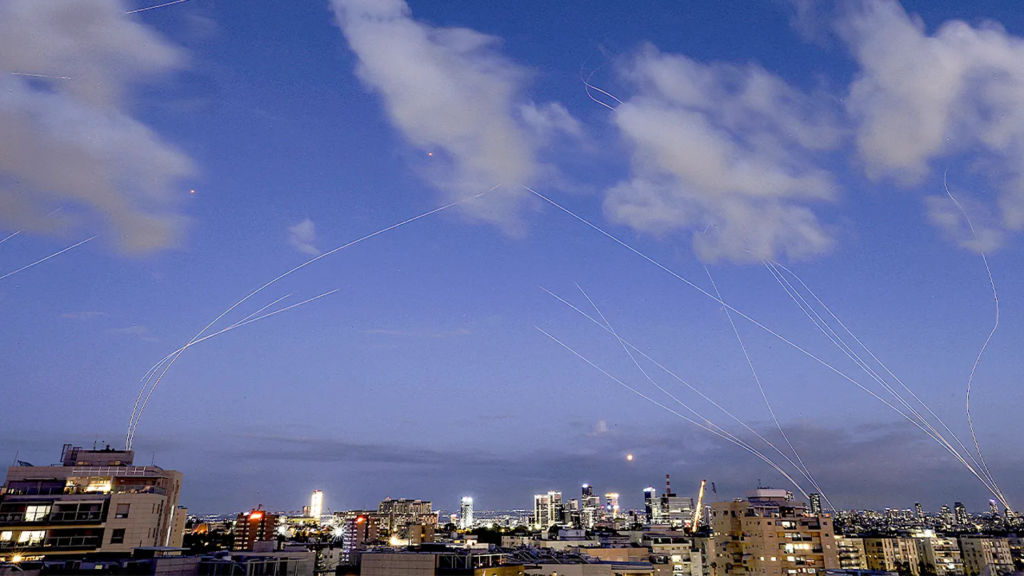
What’s Actually Happening on the Ground
The joint U.S.-Israeli campaign ,Operations Epic Fury and Roaring Lion ,began with strikes that killed Iranian Supreme Leader Ali Khamenei and dozens of senior military and IRGC figures. What followed was the kind of regional chain reaction that military planners warn about but hope never materializes.
Iran and Iranian-backed militias have been firing missiles at Israel and Arab states ,with projectiles apparently striking the U.S. Embassy compound in Kuwait ,while U.S. and Israeli aircraft continue to pound targets across Iran.
ACLED analysts record hundreds of strikes across at least 26 of Iran’s 31 provinces, with Tehran the most heavily targeted, alongside significant concentrations in central, western, and other regions of the country.
But Iran is not absorbing these blows passively. The counteroffensive has evolved. Israeli broadcaster Kan 11 reported that while the number of Iranian missile volleys has decreased from around 90 on day one to roughly 20 by day four, the missiles themselves have increased in both size and destructive impact. Quality is replacing quantity ,and one of the most alarming upgrades is the widespread deployment of cluster munitions.
The Cluster Munition Problem: Why This Matters
This is not just a military development. It is a humanitarian and legal one ,and as Americans, we need to be clear-eyed about what that means.
Israeli officials have confirmed that roughly half of the ballistic missiles Iran has fired during this conflict contain cluster munition warheads. These weapons detonate at high altitude and scatter dozens of smaller bomblets across wide areas ,sometimes spanning up to six miles. While each submunition causes less structural damage than a conventional warhead, their spread makes them far more difficult to intercept and dramatically increases the danger to civilians.
On March 9, two construction workers were killed in Yehud, outside Tel Aviv, after being struck by submunitions from an Iranian cluster bomb warhead while working outdoors. These are not military casualties. These are civilians going to work.
Cluster munitions are banned by more than 120 nations under the 2008 Convention on Cluster Munitions precisely because of their indiscriminate nature. Iran is not a signatory. Neither, it should be noted, is the United States. That fact does not excuse Iran’s use of these weapons against civilian population centers ,but it is a context Americans should hold in their heads as this conflict intensifies.
Hezbollah Re-enters the War
For over a year after the November 2024 ceasefire, Hezbollah had been largely quiet. That changed the moment Khamenei was confirmed dead.
On March 2, 2026, Hezbollah launched strikes on Israel in response to the killing of Khamenei ,the first time the group had claimed an attack in more than a year. Israel responded with strikes on Beirut.
What makes the current situation particularly concerning is the degree of operational coordination. Hezbollah is no longer simply reacting to events ,it is acting in lockstep with Iran, launching rockets and drones timed to coincide with Iranian ballistic missile barrages. The strategic logic is straightforward and dangerous: force Israel’s layered air defense systems to engage multiple incoming threats simultaneously from different vectors, hoping some get through.
According to an IDF general cited by Ynet, Hezbollah may have “fallen into a strategic ambush” by joining Iran’s war ,but that does not make their participation any less lethal in the near term.
Meanwhile, Hezbollah’s elite Radwan fighters, who withdrew from southern Lebanon following the 2024 ceasefire, have returned to positions near the town of Khiyam ,the intersection of the Lebanese, Israeli, and Syrian borders ,anticipating a possible Israeli ground invasion.
The American Dimension
Here is what I think too many U.S. news cycles are glossing over: American personnel are directly in the line of fire.
President Trump has already confirmed the deaths of three American troops killed in Kuwait, and has warned that “there will likely be more before it ends.” That is not a hypothetical. That is the commander-in-chief acknowledging that Americans are dying in this war right now.
Iraqi Shia militias have also claimed drone attacks targeting U.S. troops at Baghdad’s airport, expanding the threat surface well beyond Israel and Iran. The Strait of Hormuz ,through which roughly one-fifth of all globally traded oil passes ,is also under threat, with Iran having warned ships that passage is restricted and several vessels already attacked.
From a purely American interest standpoint, this conflict is not contained. It is spreading.
The Trump administration launched this campaign with the stated goal of regime change in Iran and the destruction of its nuclear and military capabilities. Those are enormous objectives. The question every American taxpayer and every military family should be asking is: what does the endgame actually look like, and what happens if the current air campaign does not produce it?
What Comes Next
The operational picture points toward further escalation before any de-escalation becomes possible.
Israel is expected to push for a security buffer zone in southern Lebanon, from the border to the Litani River, to prevent further rocket attacks on northern Israeli towns. That likely means a ground incursion into Lebanon ,adding a third front to a war already being fought in Iranian airspace and from the sea.
Lebanon’s government, for its part, has banned Hezbollah’s military activities and ordered security forces to prevent attacks from Lebanese territory ,and has even begun legal proceedings against those responsible for rocket launches. Dozens of Iranian Quds Force officers have already departed Beirut under Lebanese government pressure. Lebanon is trying to separate itself from a conflict it did not choose and cannot afford.
Within Lebanon, Hezbollah faces intensifying domestic pressure. Its political allies are fractured, its financial support base has eroded amid Lebanon’s ongoing economic crisis, and frustration within parts of the Shia community is more visible than in previous conflicts.
None of that stops rockets from being fired today. But it does suggest Hezbollah’s long-term position ,even if it survives this war ,is weaker than at any point in its history.
The Bottom Line
This is a war that the United States chose to enter, alongside Israel, with stated goals that are historically ambitious and tactically complex. Eleven days in, Iran and Hezbollah are coordinating in ways that are testing Israel’s air defenses to their limits, deploying banned munitions against civilians, and drawing in American personnel across multiple countries.
The cluster bomb campaign is not just a battlefield tactic ,it is a signal. Iran is willing to cross lines that most of the world has agreed should not be crossed. The response to that signal, from Washington and Jerusalem, will define how this conflict is remembered.
Americans deserve a clear-eyed view of what is being done in our name, at what cost, and toward what end. That conversation is not happening loudly enough ,and it needs to start now.
Analysis by apnews.ai editorial staff. Sources: NPR, ACLED, Wikipedia (2026 Iran War), Worthy News, Legal Insurrection. All facts independently verified from multiple outlets.