
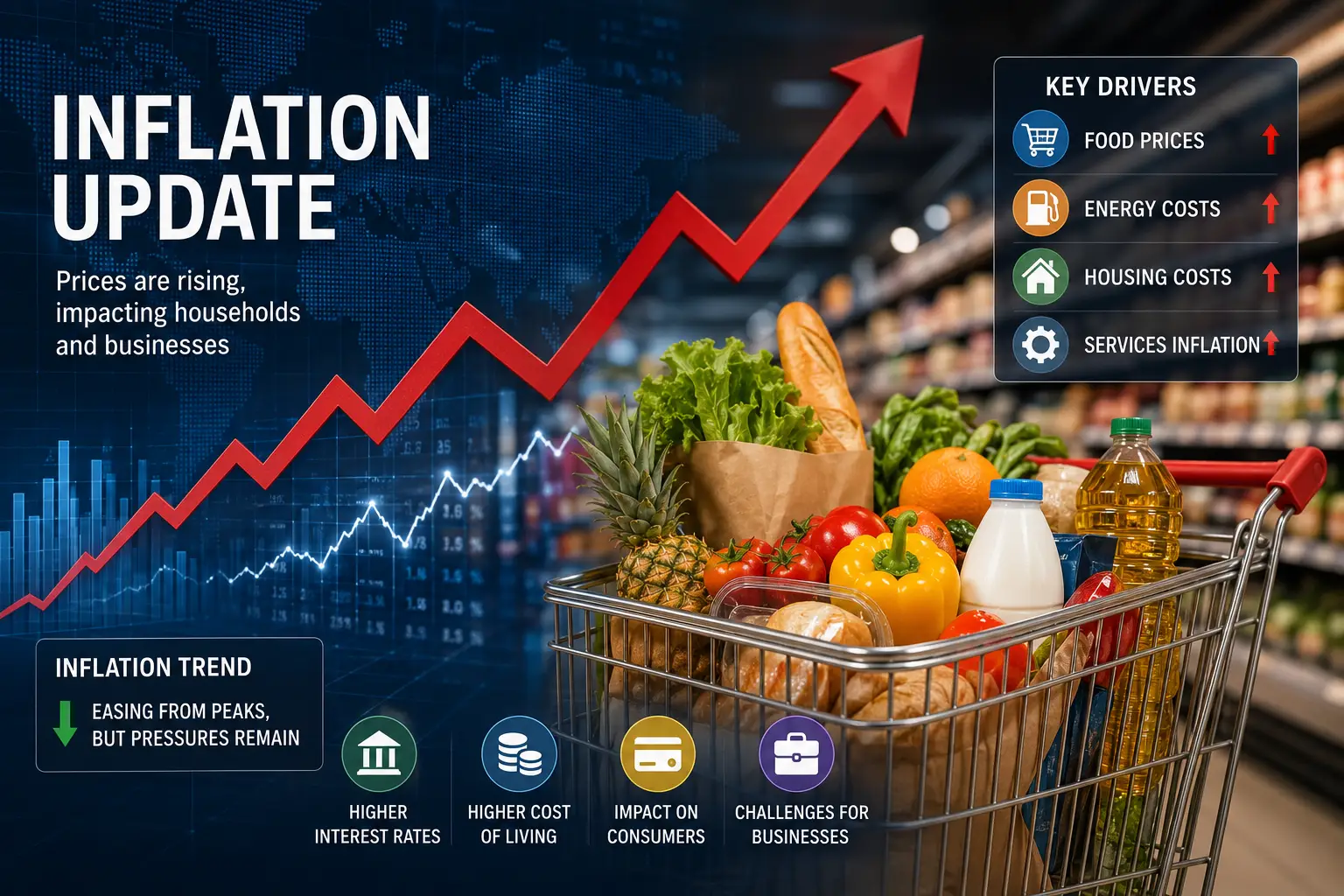
Global Inflation Eases, but Food and Energy Prices Continue to Pressure Households
AI SUMMARY · SYNTHESIZED FROM 5 SOURCES: Reuters ↗ International Monetary Fund (IMF) ↗ Organisation for Economic Co-operation and Development (OECD) — ↗ World Bank ↗ U.S. Bureau of Labor Statistics (CPI) ↗
Inflation has moderated across many major economies over the past year, but rising food and energy costs continue to weigh on households and businesses. While central banks have made progress in bringing inflation closer to their long-term targets, policymakers remain cautious as geopolitical tensions, supply-chain disruptions, and volatile commodity prices continue to create uncertainty.
Economists say inflation is moving in the right direction, but the final stage of bringing prices under control could prove to be the most challenging.
What Happened?
Recent inflation reports from several major economies indicate that headline inflation has continued to cool compared with the highs seen in previous years. Lower shipping costs, improved supply chains, and easing goods prices have helped slow the pace of price increases.
However, food prices, housing costs, and energy markets remain key drivers of inflation in many regions. Oil price volatility and higher utility costs have added renewed pressure on household budgets, while service-sector inflation remains above many central banks’ long-term targets.
Why Inflation Matters
Inflation measures how quickly the prices of goods and services increase over time.
When inflation rises:
- Consumers pay more for groceries, fuel, and everyday essentials.
- Businesses face higher operating costs.
- Borrowing becomes more expensive as interest rates rise.
- Household purchasing power declines.
Moderate inflation is considered healthy for an economy, but persistently high inflation can slow economic growth and reduce consumer confidence.
Central Banks Remain Cautious
Although inflation has eased, many central banks continue to signal a cautious approach to future interest-rate decisions.
Officials are closely monitoring:
- Wage growth
- Energy prices
- Housing costs
- Consumer demand
- Global geopolitical developments
Many economists believe policymakers will require several months of consistent inflation data before considering significant changes to monetary policy.
Impact on Consumers
Households continue adjusting their spending habits in response to higher living costs.
Many consumers are:
- Spending more carefully on discretionary purchases.
- Looking for lower-cost alternatives.
- Delaying major purchases such as vehicles and homes.
- Increasing savings where possible.
Retailers are also adapting by offering more promotions and expanding value-focused product lines to attract price-conscious shoppers.
Impact on Businesses
Businesses continue balancing higher operating costs with slowing consumer demand.
Companies across manufacturing, transportation, hospitality, and retail are investing in automation, artificial intelligence, and supply-chain improvements to improve efficiency while managing costs.
Many firms are also negotiating longer-term supplier contracts to reduce exposure to commodity price volatility.
What Investors Are Watching
Financial markets are now focused on several economic indicators that could influence inflation over the coming months:
- Consumer Price Index (CPI)
- Producer Price Index (PPI)
- Employment reports
- Wage growth
- Oil and natural gas prices
- Central bank policy meetings
These reports are expected to shape expectations for future interest-rate decisions and broader market sentiment.
Key Takeaways
- Inflation continues to ease across many major economies.
- Food and energy prices remain important sources of inflationary pressure.
- Central banks are expected to remain cautious before making major policy changes.
- Consumers continue adjusting spending habits to manage higher living costs.
- Investors are closely monitoring upcoming inflation and employment data.
Why This Matters
Inflation affects nearly every part of the global economy—from grocery bills and fuel prices to mortgage rates and business investment.
Although progress has been made in slowing price growth, maintaining stable inflation remains one of the biggest challenges facing policymakers. The coming months will be critical in determining whether inflation continues to moderate or whether renewed cost pressures delay further economic recovery.
AI Transparency Notice
This article was generated by AI using publicly available reporting and official economic data from the sources listed above. APNews.ai does not conduct original reporting. Readers should consult the original sources for complete context and the latest updates.








