Cronenworth Hit in Face by 96 mph Pitch, Plays On
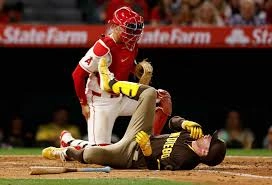
San Diego Padres infielder Jake Cronenworth was struck in the face by a 96 mph fastball during a game against the Los Angeles Angels on Thursday, but remained in the game and helped his team rally to a victory. The incident came as the Padres were fighting to maintain momentum in a tightly contested early-season stretch.
The pitch that hit Cronenworth prompted immediate concern from players and staff as medical personnel checked him on the field. After a brief evaluation, he stayed in the lineup and contributed to the comeback that secured the win for San Diego.
Background and player history
Jake Cronenworth, 30, has been a regular member of the Padres lineup since joining the club. Known for his versatility – able to play first base, second base and in the outfield – Cronenworth has been a steady presence in the middle of the order when healthy.
Being struck by a pitch is an occupational hazard in baseball, and head impacts in particular have drawn increasing attention in recent years. Major League Baseball has refined concussion protocols and on-field medical procedures to address those risks, and teams are expected to follow a clear set of steps when a player takes a blow to the head or face.
Key facts, figures and immediate sequence
The pitch that hit Cronenworth was clocked at 96 mph. He was hit in the face area and received attention from trainers before returning to the dugout. Team officials indicated that he did not leave the game immediately following the incident.
Details of the play and how the Padres rallied unfolded over the final innings. Teammates rallied at the plate and the Padres manufactured runs through a combination of hits and situational hitting, overcoming a deficit to take the lead and ultimately secure the victory.
Key facts about the incident and the surrounding game include:
- The pitch speed was recorded at 96 mph.
- Medical staff performed an on-field evaluation before Cronenworth remained in the game.
- The Padres staged a late-game rally to win the contest.
How MLB handles head impacts
Major League Baseball has a structured approach to head impacts. When a player is struck in the head or face, club medical staff perform an initial evaluation and can remove a player for further assessment if any symptoms of concussion are present.
If a player exhibits signs such as loss of consciousness, disorientation, persistent headache, nausea or other symptoms, teams follow the official MLB concussion protocol which may include neurocognitive testing and a graduated return-to-play process.
Reactions and responses
Team officials described the response as immediate and in line with standard procedure. Managers and trainers were reported to be closely monitoring Cronenworth following the impact and after the game.
Analysts and former players noted that staying in the game after taking a high-velocity pitch to the face is a judgment call that balances competitive desire and medical caution. Some analysts said that short-term adrenaline and the desire to help the team can mask symptoms, which is why thorough medical checks are necessary.
Opponents and league officials typically refrain from commenting on a team’s internal medical evaluations, but there is a broader consensus that enhancing player safety remains a priority across the sport.
Broader implications and what happens next
The incident underscores ongoing concerns about player safety and the protocols designed to protect athletes. Even when a player is able to continue immediately after an impact, teams often monitor them closely for delayed symptoms.
For the Padres, the immediate concern is Cronenworth’s short-term health and availability. Team medical staff will likely perform follow-up checks in the days after the game to rule out concussion or other injuries. If any symptoms emerge, the team can place a player on the injured list while he completes the concussion protocol.
From a competitive standpoint, the Padres’ ability to rally and win despite the scare may be seen as a positive sign for team resilience. However, roster health remains a central factor for any club pursuing postseason aspirations, and repeated head-impact incidents can affect lineups and strategy.
Context on hit-by-pitch frequency and safety measures
Hit-by-pitch incidents are relatively uncommon but not rare at the major league level. Hits to the body are more frequent than to the head or face, but when they occur they prompt heightened scrutiny because of the potential for serious injury.
Recent seasons have seen continued emphasis on protective equipment, such as batting helmets with enhanced protection and optional face-guards. Leagues, teams and equipment manufacturers continue to explore ways to mitigate risk, though no equipment can eliminate the danger completely.
Player health monitoring and team communication
If a player demonstrates any concerning symptoms after a head impact, teams have a series of steps to follow that involve independent neurological testing, imaging where appropriate and a graduated return-to-play plan. Communication between trainers, managers and front-office medical staff guides decisions on roster moves and public updates.
Officials noted that player transparency is important. Encouraging athletes to report symptoms without fear of losing playing time helps medical staff make accurate assessments and protects long-term health.
Frequently Asked Questions
Was Jake Cronenworth removed from the game after being hit?
He was evaluated on the field by medical personnel and remained in the game. Team staff monitored him closely during play and conducted any follow-up checks as part of standard procedure.
How fast was the pitch that hit him?
The pitch was recorded at 96 mph. Pitch speed is captured by radar systems used during MLB games and is routinely reported for tracking and analysis.
What is MLB’s concussion protocol after a head impact?
MLB’s concussion protocol requires immediate evaluation by medical staff, removal from play if concussion symptoms are present, and a series of neurocognitive tests and medical clearances before a player can return. The process is designed to protect players from returning too soon.
How common are facial hits in Major League Baseball?
Hits to the body occur more often than facial impacts, but face and head hits do happen and draw significant attention due to the higher risk of concussion and facial injury. Protective equipment and training aim to reduce these risks.
Could Cronenworth miss time after this incident?
If he develops symptoms consistent with a concussion, the team would follow the concussion protocol and he could be placed on the injured list until cleared. If no symptoms arise, he may continue with routine monitoring and return to normal play.
What steps do teams take immediately after a player is hit in the head?
Trainers perform an on-field evaluation, remove the player for further testing if needed, and document symptoms. Teams use standardized assessments and consult with medical professionals to determine appropriate next steps.
In the immediate aftermath of the game, the Padres emphasized player safety while noting the positive result on the scoreboard. Cronenworth’s willingness to remain in the lineup drew attention, but team officials stressed that medical evaluations guided his availability.
As the season continues, the club will keep monitoring his condition and make roster decisions based on medical guidance and game needs. The incident is a reminder of the physical risks inherent in baseball and the continued importance of robust health protocols for players at every level.
Featured image: Photo by Murry Lee via Pexels
Disclaimer
The content published on APNews.ai is for informational purposes only. While we strive to ensure accuracy and reliability, we make no guarantees regarding the completeness or timeliness of the information presented. News and facts may change after publication, and APNews.ai is not responsible for any errors or omissions.
Views expressed in opinion pieces are those of the authors and do not necessarily reflect the position of APNews.ai. We are an independent news platform and are not affiliated with the Associated Press or any other news agency unless explicitly stated.
APNews.ai does not endorse any political party, organization, or product mentioned in our coverage. Readers are encouraged to verify information independently. We are not liable for any damages arising from reliance on content published on this platform.