
Australia Expands Prime Minister’s National Spelling Bee to Boost Literacy Among Students
AI SUMMARY · SYNTHESIZED FROM 3 SOURCES: Kids News Australia ↗ Daily Telegraph Australia ↗ Australian Government ↗
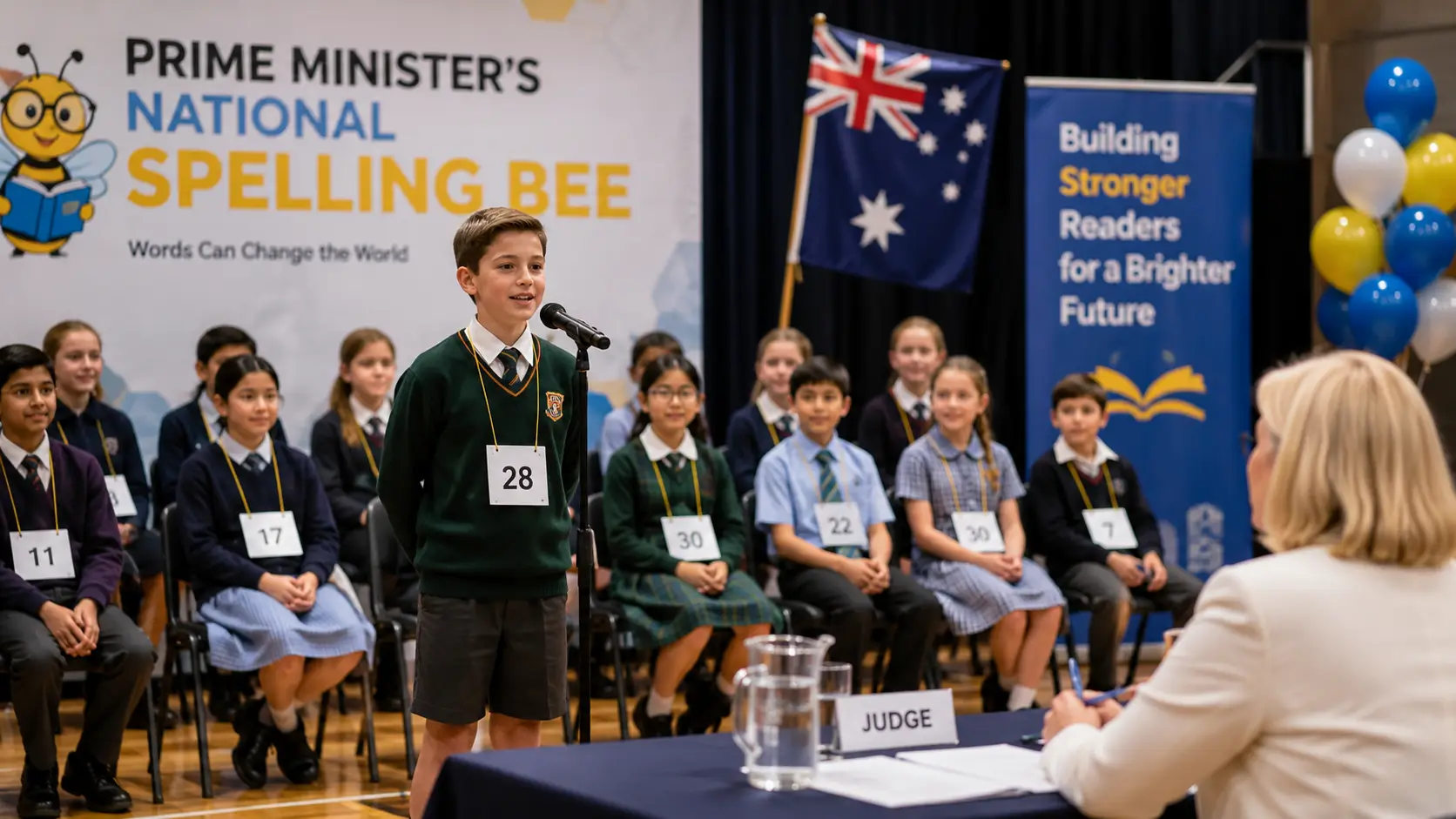
Australia has announced a major expansion of its Prime Minister’s National Spelling Bee, providing thousands of additional primary school students with the opportunity to participate in one of the country’s largest literacy competitions.
The expanded program reflects Australia’s continued commitment to improving literacy skills, encouraging reading habits, and helping students build confidence in language learning.
Education leaders believe spelling competitions not only improve vocabulary but also strengthen reading comprehension, communication, and academic performance throughout a student’s educational journey.
Why Australia Is Expanding the Competition
The decision comes amid growing national concern about literacy outcomes and the importance of ensuring every child develops strong reading and writing skills from an early age.
By expanding the competition, the Australian Government hopes to:
- Increase student participation nationwide
- Improve literacy outcomes
- Encourage classroom engagement
- Promote healthy academic competition
- Inspire a lifelong love of reading
Officials say more schools than ever before expressed interest in joining the competition, leading to the decision to broaden eligibility.
More Students Can Now Participate
One of the biggest changes announced this year is a significant increase in the number of students eligible to qualify.
Instead of limiting participation to a smaller group of top performers, the expanded format allows many more students to progress through school, regional, and national rounds.
The broader approach gives children from rural, regional, and metropolitan communities equal opportunities to compete.
Education experts believe wider participation helps students gain confidence regardless of whether they ultimately reach the national finals.
Why Spelling Bees Matter
Although spelling competitions may appear simple, research consistently shows they contribute to several important educational outcomes.
Students who regularly practice spelling often improve:
Vocabulary Development
Learning new words naturally expands students’ vocabulary and improves communication skills.
Reading Comprehension
Understanding word structures helps children read faster and more accurately.
Writing Skills
Correct spelling improves written communication across every school subject.
Memory and Concentration
Preparing for competitions encourages repetition, focus, and long-term memory development.
Public Speaking
Participants gain confidence spelling words aloud before judges and audiences.
These benefits extend well beyond the competition itself and support overall academic achievement.
Schools Welcome the Expansion
Teachers across Australia have welcomed the government’s announcement.
Many schools already organize classroom spelling competitions, making the national event an exciting opportunity for students to showcase their abilities.
Educators say literacy competitions motivate children who may otherwise have limited interest in reading or language studies.
Schools also appreciate that the competition encourages positive collaboration among teachers, parents, and students.
Parents Play an Important Role
Education experts emphasize that literacy development begins at home.
Parents are encouraged to:
- Read with children every day
- Introduce new vocabulary through conversation
- Encourage independent reading
- Practice spelling through games
- Celebrate learning achievements rather than focusing solely on winning
Family support often has a lasting impact on children’s academic confidence.
Technology Is Changing Literacy Education
Modern spelling competitions increasingly incorporate digital learning tools.
Many schools now use:
- Educational apps
- Online vocabulary games
- Interactive spelling platforms
- AI-assisted language learning
- Digital dictionaries
These technologies allow students to practice anytime while making learning more engaging.
Education leaders stress that technology should enhance—not replace—traditional reading and classroom instruction.
Literacy Remains a National Priority
Strong literacy skills remain essential for success in higher education and future employment.
Studies consistently show that children with strong reading abilities perform better across subjects including:
- Science
- Mathematics
- Social Studies
- Technology
- Languages
Improving literacy also supports lifelong learning and critical thinking.
Australia’s continued investment demonstrates recognition that literacy forms the foundation of every student’s education.
Looking Ahead
The expanded Prime Minister’s National Spelling Bee is expected to involve thousands of schools across Australia.
Education officials hope the initiative will inspire more children to read regularly, improve vocabulary, and develop confidence in language learning.
If participation continues growing, the program could become one of the country’s largest literacy initiatives, helping prepare students for future academic success.
Conclusion
Australia’s decision to expand its Prime Minister’s National Spelling Bee reflects a broader commitment to improving literacy and educational excellence.
By allowing more students to participate, the initiative promotes equal opportunity, strengthens reading and writing skills, and encourages children to develop a lifelong passion for learning.
As education systems continue evolving, programs like these demonstrate how academic competitions can motivate students while building skills that extend far beyond the classroom.








