
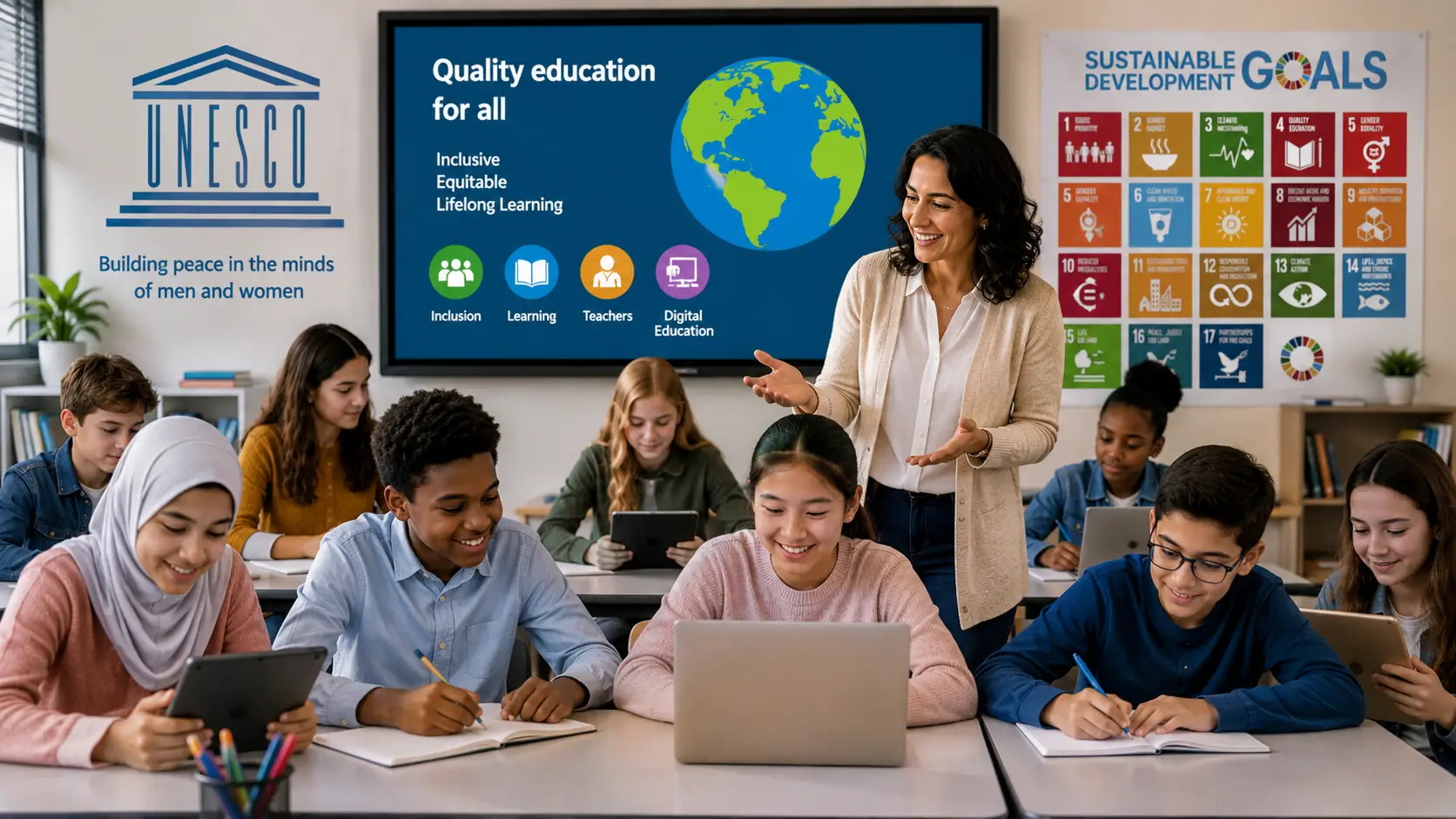
UNESCO Launches New Global Education Initiatives to Improve Learning Worldwide
AI SUMMARY · SYNTHESIZED FROM 3 SOURCES: UNESCO Education News ↗ UNESCO SDG 4 ↗ UNESCO Global Education Monitoring (GEM) Report ↗
The United Nations Educational, Scientific and Cultural Organization (UNESCO) has announced a series of new education initiatives designed to strengthen education systems worldwide and help countries achieve Sustainable Development Goal 4 (SDG 4): ensuring inclusive, equitable, and quality education for all.
The latest initiatives come at a time when education systems continue recovering from years of disruption caused by the COVID-19 pandemic, armed conflicts, climate-related disasters, and increasing technological change.
According to UNESCO, millions of children around the world still face barriers to accessing quality education. The organization believes stronger international cooperation and investment are essential to ensure every child has the opportunity to learn and succeed.
Global Education Still Faces Major Challenges
Although access to education has improved over the past decade, significant challenges remain.
Worldwide, millions of children are still out of school due to poverty, conflict, displacement, discrimination, and inadequate educational infrastructure.
Many countries also struggle with:
- Teacher shortages
- Limited internet access
- Outdated learning materials
- Overcrowded classrooms
- Gender inequality
- Learning loss after the pandemic
UNESCO’s new initiatives aim to help governments address these issues through practical, long-term solutions.
Expanding Digital Learning
One of UNESCO’s highest priorities is improving digital education.
Technology has transformed classrooms across the world, but unequal access continues creating a significant digital divide.
The organization is encouraging countries to invest in:
- High-speed internet for schools
- Digital classrooms
- Educational technology platforms
- Online learning resources
- Artificial intelligence for education
- Cyber safety education
UNESCO emphasizes that technology should complement teachers—not replace them.
Digital learning is expected to become increasingly important as AI-powered educational tools continue evolving.
Supporting Teachers Worldwide
Teachers remain at the center of quality education.
UNESCO’s latest programs include expanded support for educators through:
Professional Development
Providing modern teaching methods and classroom management training.
Digital Skills Training
Helping teachers confidently integrate technology into lessons.
Continuous Learning
Offering professional development throughout teachers’ careers.
International Collaboration
Encouraging educators to share successful teaching practices across countries.
Education experts note that investing in teachers produces long-term improvements in student achievement.
Promoting Girls’ Education
Gender equality remains one of UNESCO’s core priorities.
Although significant progress has been made globally, millions of girls still face barriers preventing them from completing their education.
UNESCO’s initiatives aim to:
- Increase girls’ enrollment
- Improve school safety
- Reduce early school dropout
- Support female teachers
- Encourage STEM education for girls
- Promote equal educational opportunities
Research consistently shows that educating girls contributes to stronger economies, healthier communities, and reduced poverty.
Education During Emergencies
Conflict and natural disasters continue disrupting education for millions of children.
UNESCO is expanding programs that help maintain learning during emergencies by supporting:
- Temporary learning centers
- Distance education
- Teacher support in crisis areas
- Digital learning platforms
- School reconstruction projects
The organization believes uninterrupted education is essential for protecting children’s future opportunities.
Literacy and Lifelong Learning
UNESCO also continues promoting literacy for both children and adults.
The organization recognizes literacy as the foundation for:
- Employment
- Economic growth
- Civic participation
- Health awareness
- Social inclusion
New initiatives encourage governments to improve reading programs while expanding adult education opportunities.
Lifelong learning is increasingly viewed as essential in today’s rapidly changing workforce.
Artificial Intelligence in Education
Artificial intelligence is becoming an important part of education worldwide.
UNESCO supports responsible use of AI while encouraging governments to establish ethical guidelines.
Potential benefits include:
- Personalized learning
- Automatic language translation
- Accessibility tools
- Adaptive assessments
- Student performance analysis
However, UNESCO also stresses the importance of protecting student privacy, ensuring transparency, and maintaining human oversight.
Global Cooperation Remains Essential
Education experts agree that no single country can solve global education challenges alone.
UNESCO continues working with governments, universities, NGOs, teachers, and private-sector organizations to strengthen education systems through international partnerships.
These collaborations help countries share best practices while developing innovative solutions tailored to local needs.
Looking Ahead
As education continues evolving alongside technological advancements and global challenges, UNESCO believes investing in teachers, technology, inclusion, and international cooperation will remain critical.
The organization’s latest initiatives demonstrate a long-term commitment to ensuring every learner has access to quality education regardless of geography, gender, or economic background.
Conclusion
UNESCO’s newest global education initiatives reflect an ambitious vision for the future of learnin
By focusing on digital transformation, teacher development, girls’ education, literacy, emergency education, and ethical AI, the organization hopes to create stronger and more inclusive education systems around the world.
While challenges remain, these efforts provide a roadmap for governments and educators seeking to build a more equitable future where quality education is accessible to everyone.








