
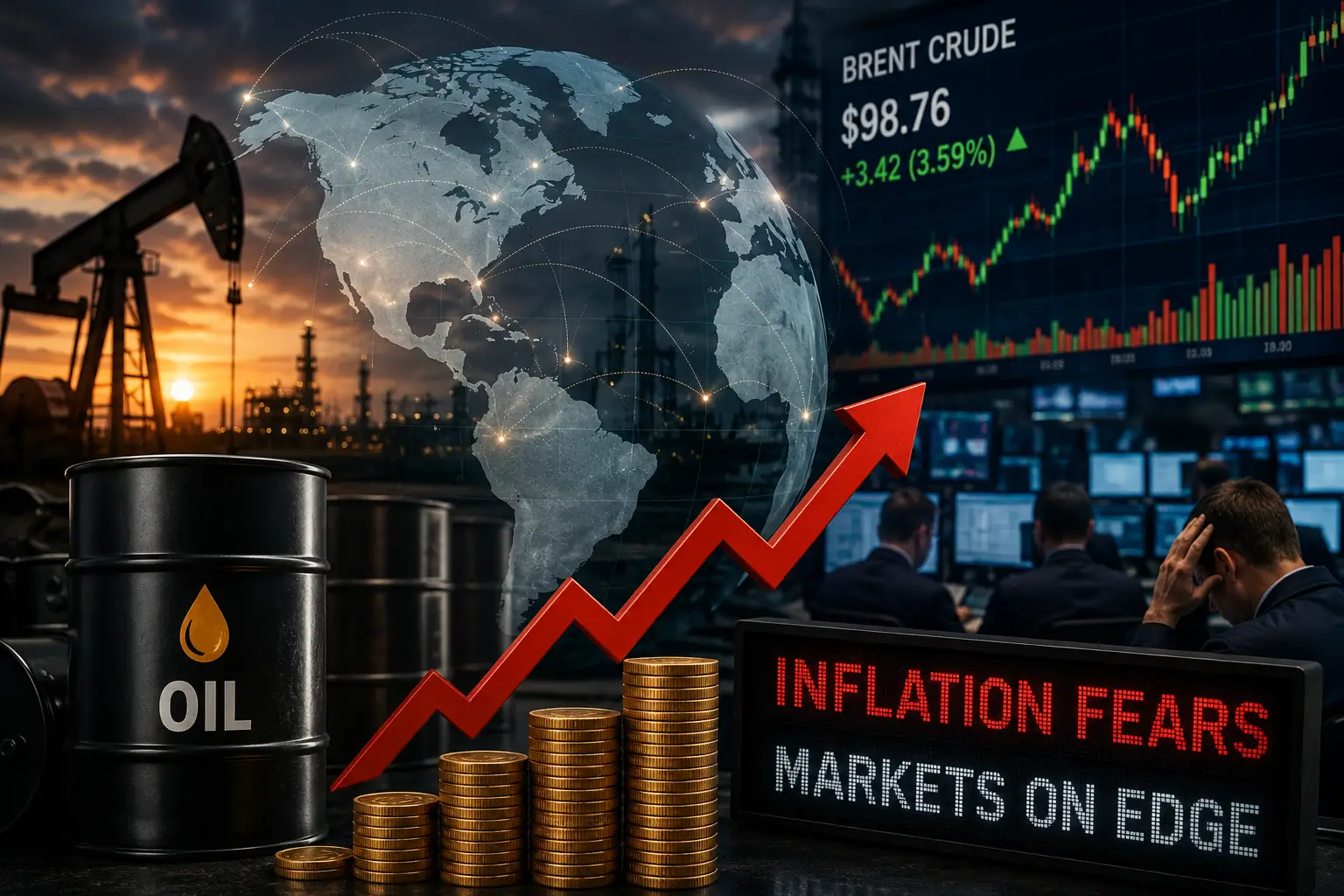
Global Markets on Edge as Oil Surge Rekindles Inflation Fears
AI SUMMARY · SYNTHESIZED FROM 2 SOURCES: Financial Times ↗ Reuters ↗
Global financial markets traded cautiously on Thursday as a sharp rise in oil prices reignited concerns about inflation and higher borrowing costs. Investors reacted to escalating geopolitical tensions in the Middle East, which pushed Brent crude close to the $100-per-barrel mark and increased fears of supply disruptions through one of the world’s most important energy routes.
While energy companies benefited from higher oil prices, broader equity markets struggled as investors reassessed expectations for interest rates. Bond yields climbed across Europe and the United States, reflecting growing expectations that central banks could keep monetary policy tighter for longer.
What Happened?
Crude oil prices extended their recent rally after renewed instability in the Middle East raised concerns about disruptions to global energy supplies. Traders closely monitored developments affecting shipping through the Strait of Hormuz, a critical route for international oil exports.
The jump in energy prices quickly spread through financial markets:
- European stock indexes moved lower.
- U.S. Treasury yields climbed.
- Government bond yields across Europe reached multi-year highs.
- Investors shifted toward defensive assets while reducing exposure to risk-sensitive sectors.
Why Oil Prices Matter
Oil is one of the world’s most important commodities. When prices rise significantly, transportation, manufacturing, agriculture, aviation, and logistics all become more expensive.
Those higher costs often flow through to consumers in the form of:
- Higher gasoline prices
- Increased shipping costs
- More expensive groceries
- Rising airline fares
- Higher manufacturing expenses
As inflation rises, central banks may postpone interest-rate cuts—or even consider further increases—to slow price growth.
Market Impact
Stocks
Global equity markets remained mixed as investors balanced strong corporate earnings against concerns that persistent inflation could weigh on future economic growth.
Technology stocks continued to attract interest, although broader indexes lost momentum amid higher borrowing costs.
Bonds
Government bond yields climbed sharply as investors priced in the possibility of tighter monetary policy for longer.
Higher bond yields generally reduce the appeal of growth stocks because companies face higher financing costs.
Energy Sector
Oil and energy companies outperformed much of the broader market as higher crude prices improved revenue expectations.
What Investors Are Watching Next
Markets are now focusing on several key developments over the coming days:
- Central bank policy decisions
- Inflation reports
- Corporate earnings from major technology companies
- Any escalation or easing of tensions in the Middle East
- Oil supply and shipping conditions through the Strait of Hormuz
Key Takeaways
- Oil prices climbed sharply due to geopolitical tensions.
- Rising energy costs renewed global inflation concerns.
- Bond yields increased as investors anticipated higher interest rates.
- Stock markets became more cautious despite continued strength in parts of the technology sector.
- Central bank decisions and geopolitical developments are expected to remain the biggest drivers of market sentiment in the coming weeks.
Why This Matters
Financial markets are highly interconnected. A sustained increase in oil prices affects not only energy companies but also consumers, businesses, and governments around the world. If inflation remains elevated, borrowing costs could stay higher for longer, influencing everything from mortgages and business investment to stock valuations.
For investors, the coming weeks may be defined by the balance between geopolitical risk, inflation trends, and central bank policy.
AI Transparency Notice
This article was generated by AI using information from publicly reported news by the sources listed above. APNews.ai does not conduct original reporting. Readers are encouraged to review the original source articles for complete context and ongoing updates








