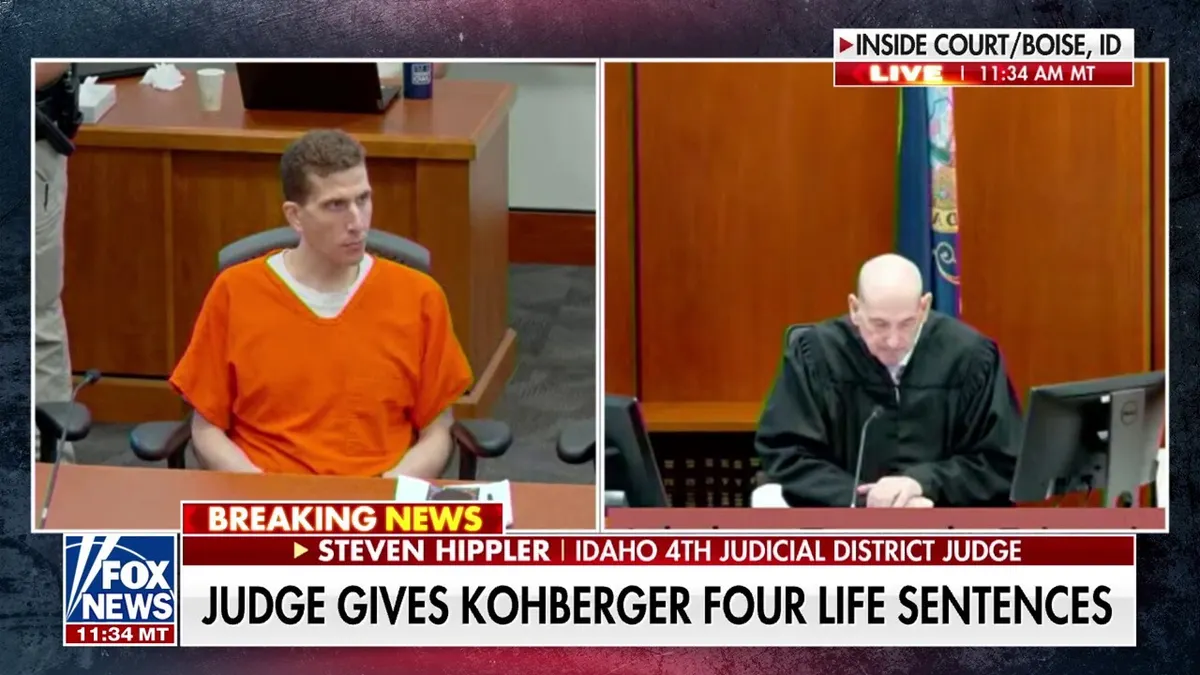
Emails show campus police tracked Kohberger’s car weeks earlier
Emails released in court filings show campus police at the University of Idaho recorded sightings of a vehicle tied to Bryan Kohberger weeks before he was charged in the slayings of four students, according to documents made public this month.
The correspondence, produced as part of discovery in the criminal case, details how officers logged license plate information and shared observations with other law enforcement agencies as investigators worked to piece together movements around the time of the Nov. 13, 2022 killings in Moscow, Idaho.
Background and history of the investigation
On Nov. 13, 2022, four University of Idaho students were found fatally stabbed in an off-campus residence. The victims were identified as Kaylee Goncalves, Xana Kernodle, Madison Mogen and Ethan Chapin. The case drew intense national attention and spurred a multiagency probe involving local police, university police, state investigators and the FBI.
Investigators arrested 28-year-old Bryan Kohberger on Dec. 30, 2022, at his parents’ home in Pennsylvania. He was charged in Idaho with multiple counts, including first-degree murder and burglary, and has pleaded not guilty. Prosecutors have said the arrest followed traditional investigative work that brought together a range of leads and records.
The newly released emails were included in discovery materials that prosecutors turned over to defense attorneys. They show the University of Idaho Police Department logged at least one instance of a car registered to the suspect’s family on or near campus in the weeks after the murders, and that campus officers shared that information with other agencies involved in the investigation.
Key facts, figures and stakeholders
The court documents do not suggest the campus police were treating the registered owner as a suspect at the time the messages were exchanged. Instead, the emails indicate officers were documenting unusual or out-of-area vehicles and passing license plate numbers to investigators coordinating the case.
What the emails show:
- Campus officers noted a vehicle matching the description of a car tied to Kohberger’s family was observed on or near the university campus weeks before charges were filed.
- License plate information and sighting details were shared by email with other law enforcement partners.
- Messages were dated in the weeks following the Nov. 13 slayings and before Kohberger’s arrest on Dec. 30, 2022.
Stakeholders in the matter include the University of Idaho Police Department, the Moscow Police Department, the Idaho State Police, the FBI and the Latah County prosecutor’s office. The defense team has access to discovery and can use the emails to challenge or contextualize investigative steps taken before charges were filed.
Reactions
Officials involved in the investigation have framed the exchange of information as routine case coordination. Police agencies often share sightings, license plate checks and other records when multiple jurisdictions work a complex case, they say.
Analysts and legal experts consulted by reporters noted that such communication is common in major investigations, and that early attention to vehicles or people seen near a crime scene does not by itself establish probable cause for an arrest. They cautioned that pre-charge investigative steps can be misread without broader context about how leads are developed and verified.
Civil liberties advocates said the documents raise questions about campus surveillance practices and the scope of information routinely gathered and shared by campus police. Some privacy advocates called for clearer public policies on how license plate data and other observational records are collected and stored by university departments.
Family members of the victims have largely stayed out of public comment about the newly revealed emails. In prior statements, the families expressed a desire to see a full accounting of the investigation and for the criminal case to proceed through the courts.
Broader implications and what happens next
The emails will likely figure into pretrial litigation as the defense continues to review evidence and possibly pursue motions aimed at limiting what prosecutors can present at trial. Defense attorneys often scrutinize discovery to identify investigative missteps or to argue that certain evidence should be suppressed because it was obtained improperly.
More broadly, the documents have renewed debate about how college police departments operate and coordinate with outside agencies. Universities nationwide have been examining policies that govern data collection practices such as license plate readers, CCTV, and how those sources are shared with law enforcement.
Legal observers say several potential lines of argument could emerge during pretrial proceedings, including questions about whether investigators relied on adequate corroboration before zeroing in on specific subjects and how readily shared observational data should be treated in court.
The criminal case itself remains active. Prosecutors are moving forward with charges, and defense attorneys are continuing to review discovery and prepare for upcoming hearings. A trial date has been set in prior court filings, but scheduling may be affected by pretrial motions and other procedural matters.
Frequently Asked Questions
What do the released emails say about the car sighting?
The emails document that University of Idaho campus police logged sightings of a vehicle registered to the family of Bryan Kohberger weeks before he was charged. They show officers recorded license plate information and shared those details with other investigating agencies as part of early follow-up work.
Were police treating Kohberger as a suspect when they logged the car?
The documents released do not indicate he was being treated as a suspect at the time. The emails suggest the sightings were entered as part of routine documentation of vehicles of interest and shared among agencies working the case.
How were the emails made public?
The emails were produced in discovery and included in court filings that are part of the public record. Such documents are typically exchanged between prosecutors and defense counsel and can be released or entered into court records where they become accessible to the public.
What legal issues could the emails raise in the case?
Defense attorneys may examine the emails for evidence of investigative errors or to argue about the admissibility of later evidence. Privacy advocates may also use the documents to press for more oversight of campus data collection and sharing practices.
Will this change how campus police operate?
The revelations may prompt universities to review policies on data collection, retention and sharing with outside law enforcement. Some campuses have already undertaken such reviews in recent years, and the documents could accelerate policy discussions at other institutions.
What is the current status of the criminal case?
The case remains pending in Idaho. Prosecutors have filed multiple charges tied to the Nov. 13, 2022 homicides, and defense counsel continue to review discovery and prepare pretrial motions. Court proceedings are ongoing.
As the legal process moves forward, the emails add another layer of detail about how investigators compiled leads in the days and weeks after the slayings. Whether the records will have a decisive role in pretrial rulings or at trial itself remains to be determined by the courts.
Featured image: Photo by Eric Lozaga via Pexels
Disclaimer
The content published on APNews.ai is for informational purposes only. While we strive to ensure accuracy and reliability, we make no guarantees regarding the completeness or timeliness of the information presented. News and facts may change after publication, and APNews.ai is not responsible for any errors or omissions.
Views expressed in opinion pieces are those of the authors and do not necessarily reflect the position of APNews.ai. We are an independent news platform and are not affiliated with the Associated Press or any other news agency unless explicitly stated.
APNews.ai does not endorse any political party, organization, or product mentioned in our coverage. Readers are encouraged to verify information independently. We are not liable for any damages arising from reliance on content published on this platform.